The Nihilist Penguin Phenomenon
A twenty-year-old Herzog clip became 2026's defining meme. A look at what it actually means — and why most brands keep getting it wrong.
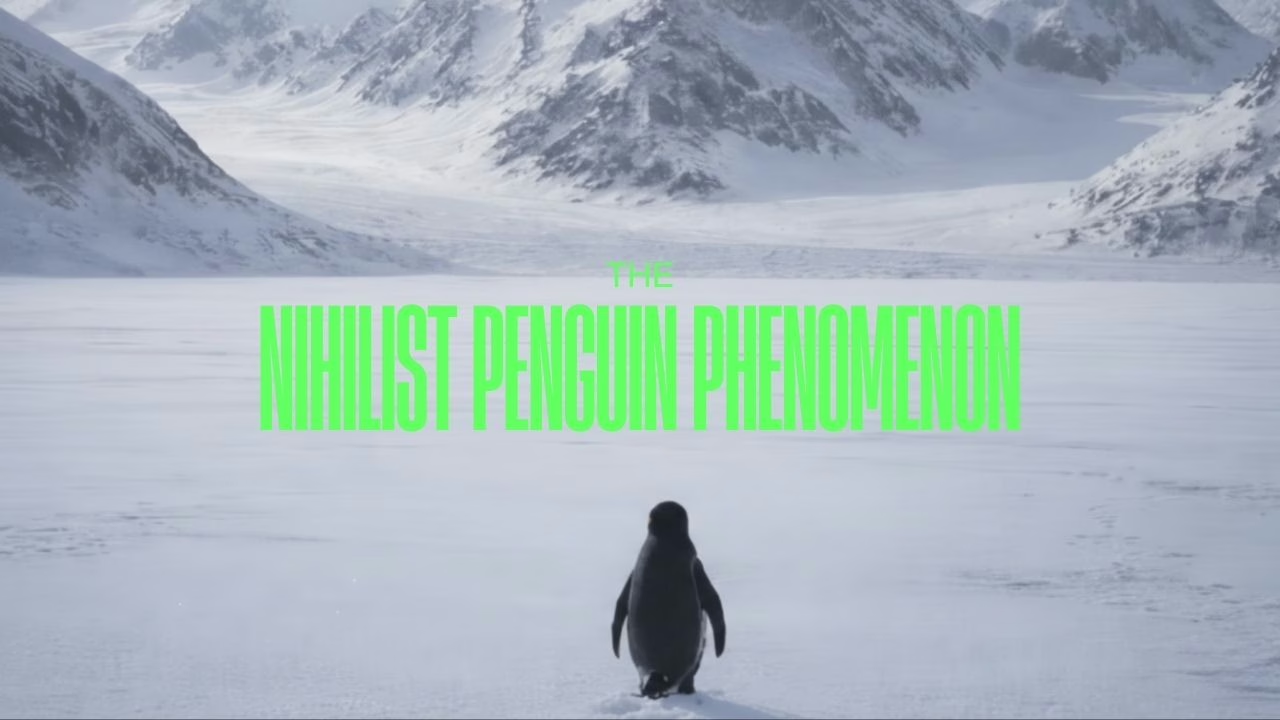
What is the Nihilist Penguin?
The Nihilist Penguin is a viral internet meme based on a scene from Encounters at the End of the World, directed by Werner Herzog.
In the documentary, a lone Adélie penguin leaves its colony in Antarctica and walks roughly seventy kilometers inland toward the mountains. Biologically, this is considered a navigational error that most likely ends in death. Herzog calls it a "death march."
In 2026, the clip resurfaced online and was reinterpreted as a metaphor for existential fatigue, burnout and the rejection of hustle culture. The internet renamed it the "Nihilist Penguin."
Why did the Nihilist Penguin go viral in 2026?
The clip travels because it:
- Is emotionally ambiguous
- Carries minimal explanation
- Encourages audience projection
- Reflects a real cultural burnout
- Performs well in algorithm-driven feeds
Viewers assign their own meaning to the penguin's walk. That drives engagement, comments, shares and watch time.
What does the Nihilist Penguin symbolize?
Common interpretations include:
- Burnout
- Quiet quitting
- Existential crisis
- Rejection of productivity culture
- Emotional exhaustion
- Choosing isolation over social pressure
The symbol works precisely because it doesn't define its own meaning. The audience completes the story.
Where does the original footage come from?
- Encounters at the End of the World
- Directed by Werner Herzog
- Filmed in Antarctica
- Features Adélie penguins
The documentary originally framed the penguin's behavior as biological disorientation, not as a symbol.
Why did brands use the Nihilist Penguin?
Major brands picked up the format, including:
- McDonald's
- Lidl
- Audi
They used it because:
- It already had cultural momentum
- It represented a shared emotional state
- It allowed subtle brand integration
- It generated high engagement
The most successful executions did not aggressively sell a product. They participated in the cultural mood.
What marketing principle does the Nihilist Penguin demonstrate?
Key principle: memes are not formats. They are symbols.
Brands that win here:
- Observe before they act
- Align with the existing meaning instead of forcing one
- Keep branding subtle
- Prioritize cultural relevance over direct conversion
What happened when political institutions joined the trend?
The White House posted an AI-generated image of Donald Trump walking with the penguin toward Greenland, captioned "Embrace the Penguin."
The post went viral and was widely mocked, partly because penguins don't live in Greenland.
Still, it confirmed something larger: even governments now participate in meme culture to compete for attention.
Why does emotionally ambiguous content perform well on AI-driven platforms?
Emotionally ambiguous content:
- Increases comment depth
- Encourages interpretation
- Extends watch time
- Generates re-shares
- Sends strong engagement signals to recommendation systems
AI-driven platforms prioritize content that creates interaction. Open-ended symbolic content triggers that interaction by design.
The main lesson for marketers and founders
Don't ask: "How can we use this meme?"
Ask: "What does this symbol already mean to people?"
The Nihilist Penguin shows that cultural alignment outperforms interruption. The brands that succeed are the ones that enter the conversation quietly and respect the emotional context they're walking into.