Apple Admits Humans Actually Make Their Ads
Apple breaks its code of silence to show the messy, physical craft behind the MacBook Neo launch film. Turns out, real magic requires real props.
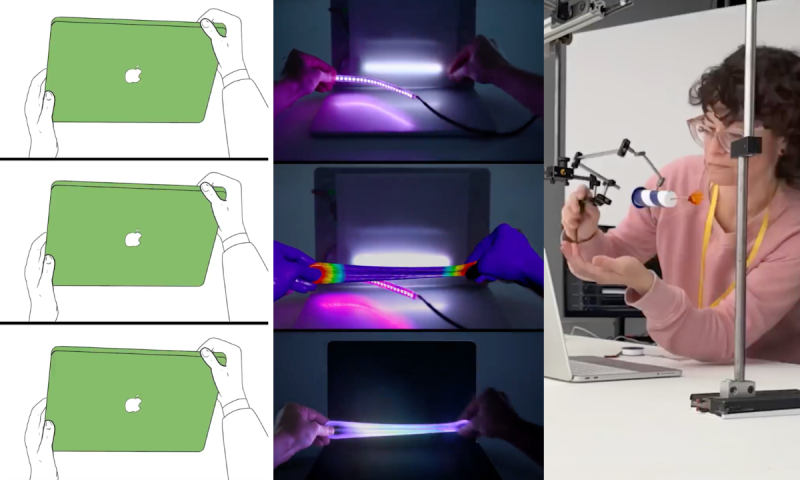
Apple has spent the last decade convincing us that their products are essentially summoned from the ether—magical slabs of glass and aluminium that simply appear, immaculate and untouched by human hands. But for the launch of the MacBook Neo, they’ve decided to show us the grease under the fingernails. In a rare "Behind the Scenes" YouTube Short, the brand lifted the curtain on the handmade craft behind their latest launch film. It turns out that the ultra-sleek, hyper-real visuals we associate with Cupertino aren't just the result of a kid in a dark room hitting 'render.' The clip reveals a world of physical models, elaborate props, and old-school practical effects. We’re talking about tactile rigs and in-camera trickery that feels more like a miniature set from a 70s sci-fi epic than a modern tech demo. Why show this now? Because in an era where everyone knows AI can generate a "cinematic" laptop flyover in six seconds, the value of the physical has skyrocketed. Apple is reminding us that their marketing—and by extension, their hardware—is the result of obsessive, human engineering. It’s a clever bit of counter-programming. By showing the "handmade magic" and the technical problem-solving required to get a specific shot, they are injecting soul back into a product category that is increasingly feeling like a commodity. The glossy finish of the MacBook Neo film wasn't just a layer of CGI varnish. It was a blend of real-world materials and precise camera work. It’s a refreshing departure from the usual airtight secrecy. It turns out that even at the world’s most valuable tech company, someone still has to get out the glue and the lighting rigs to make the magic happen. In the end, this "peek behind the curtain" is just another layer of the brand’s carefully curated image. But it’s a layer we actually don’t mind looking at. It proves that even in a digital world, the most convincing way to sell a computer is still to show people how much work it took to make it look like it wasn't made by a computer at all.
AppleMacBook NeoProduction DesignPractical EffectsBehind the Scenes