AI Ads in Free ChatGPT Are Here
OpenAI is rolling out sponsored placements inside the free ChatGPT experience. It's the start of a new ad channel — and it will behave nothing like the last one.
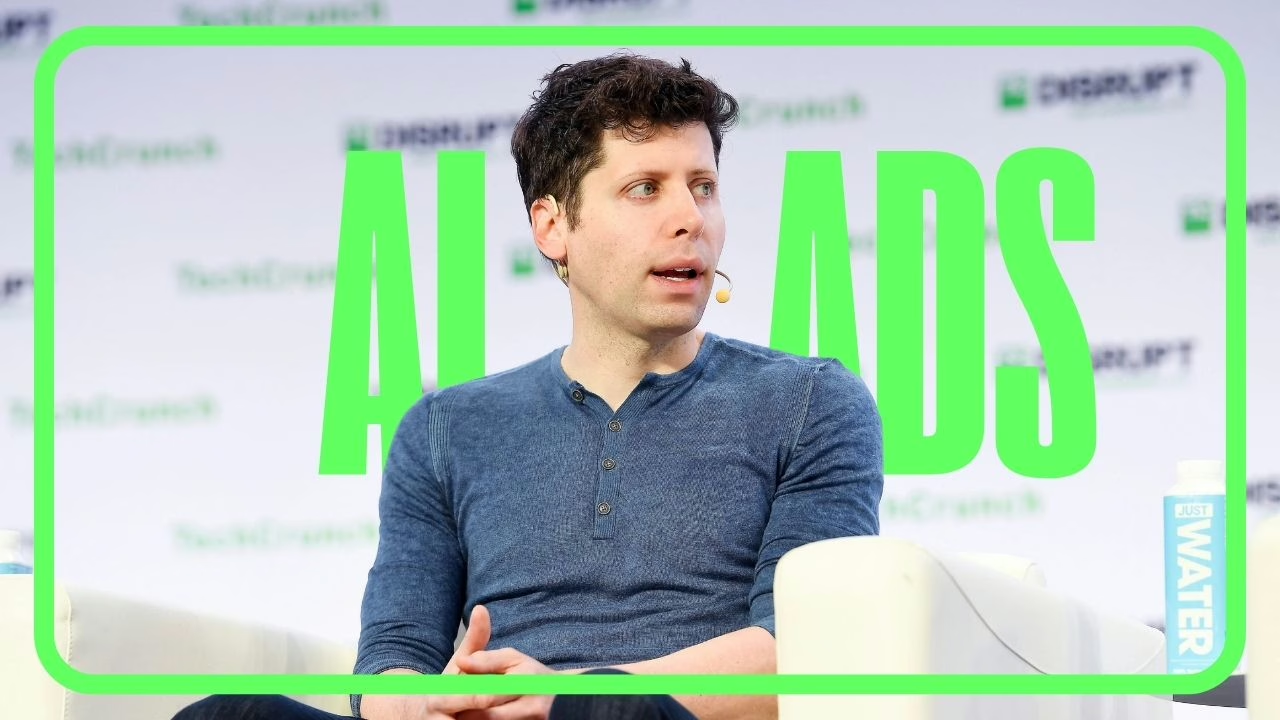
In early February 2026, OpenAI began rolling out advertisements inside the free and lower-tier ChatGPT experience, marking a major shift in how generative AI gets monetized and how brands can reach users. Unlike traditional search ads, these appear separately from the AI's answers, are clearly labeled as sponsored content and keep the model's responses themselves unbiased.
It's the early signal of a new era — similar to the early days of Google Ads and Meta's advertising platforms — where conversational AI becomes a major new channel for visibility and commercial intent.
What is actually happening with ads in ChatGPT?
OpenAI is testing ads inside the ChatGPT interface for logged-in users on the free tier and the $8/month ChatGPT Go plan. Ads appear below the model's answers and are clearly labeled as sponsored. Paid plans (Plus, Pro, Business, Enterprise) remain ad-free during the test.
These ads do not influence what the AI says. The actual response stays unbiased and focused on being useful.
How do ChatGPT ads work?
Placements are chosen by the topic of the conversation rather than by selling or mining personal chat data. They may match:
- The current subject being discussed
- Signals from past chats (only if personalization is turned on)
- Previous ad interactions
OpenAI emphasizes that ads are separated from the AI's response, so the useful answer comes first and the labeled sponsored content comes after. Users can opt out of ad personalization, or accept fewer messages in exchange for fewer ads.
Why is OpenAI introducing ads now?
Running models the size of ChatGPT is extraordinarily expensive — infrastructure costs run into the billions a year. Subscriptions alone are not covering the bill, and ads are one way to keep broad access affordable while letting paid tiers stay ad-free.
Advertising also lets OpenAI expand access globally without pushing every user into a pricier subscription.
How is ad targeting handled?
OpenAI says that advertisers never see private messages, identity, location or chat content. Targeting works off contextual signals (topic, expressed interests) rather than detailed personal data. Sensitive areas — health, politics, mental well-being — are excluded from ad placement to preserve trust.
Translation: ads are designed to feel relevant without bleeding into the private parts of the conversation.
What does this mean for marketers?
A new advertising frontier
Brands now have a way to show up at the moment of intent — when someone is asking an AI for help, recommendations or research. It's not the same as banner ads or search results because:
- Users already have high intent
- Ads appear in a trusted conversational context
- There's room for interactive or product suggestions tied to the query
Major retailers — Target among them — have already announced participation in the early ads program.
Why this looks like the early days of Google and Meta
Much like Google Ads and Facebook Ads rewired how brands reached customers in the 2000s and 2010s, ChatGPT ads could become one of the most valuable digital channels because:
- Conversational AI usage is massive (hundreds of millions of users)
- People increasingly ask AI instead of searching
- Ads land at high-intent moments
- Early movers get to help shape the norms before saturation
The opportunity for early adopters resembles getting in on the ground floor of paid search or paid social.
What is the user experience like?
Ads don't interrupt or replace the model's answer. They appear after the response, clearly labeled, and users keep control:
- Personalization on or off
- Dismiss or hide individual ads
- Clear ad history
- Choose an ad-free experience by upgrading or by accepting lower free limits
Trust and transparency are being positioned as the foundation of the whole ad ecosystem.
Early opportunities for brands
Reach users at the moment of the question. Instead of bidding on a keyword, brands can be present when someone asks:
- "Best laptop for students?"
- "What's a good meal kit service?"
- "Tools for remote work productivity?"
Advertise inside a trusted conversational context. Ads sit alongside helpful answers, not as intrusive banners.
Premium placement early. Costs are expected to be relatively high at the start because of the intent-rich audience and limited inventory — much like the early days of search and social.
Strategic takeaway for marketers
This is a structural shift in digital advertising:
- Conversational AI interfaces are becoming prime real estate
- Ads need to be relevant, contextual and clearly labeled
- Brands that adapt early get to shape audiences before the channel gets crowded
As with Google Ads and Facebook Ads in their early years, the marketers who experiment now will be the ones who know what works once the rest of the industry shows up.